
Muslin Pants
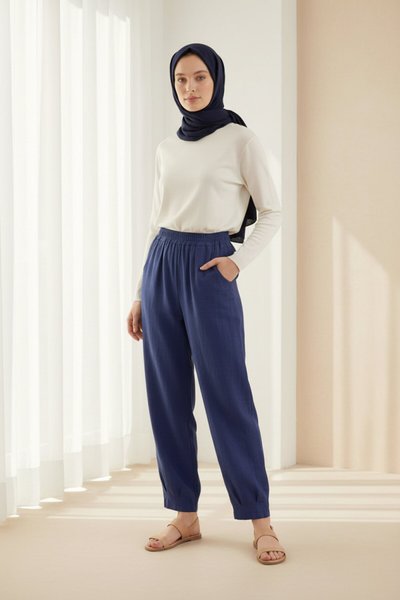
Muslin pants are woven from a cotton-based fabric known for its soft hand feel and understated structure. The options here come in relaxed and jogger cuts, sized 38 to 44, and are suited to modest everyday dressing with a casual, street-style tone. Olive and green are the available colorways, both of which pair naturally with layered modest outfits.
- Style
- Size
- Color
- Advantages
Muslin as a Fabric for Pants
Muslin is a plain-weave cotton fabric — lightweight enough to allow air circulation, yet structured enough to hold shape through the day. Unlike stretch knits or synthetic blends, muslin sits away from the body rather than conforming to it, which makes it a practical choice for modest trousers. The woven construction also means less static and a cleaner drape compared to viscose or polyester alternatives. Cotton content in muslin pants generally makes them easier to launder and more comfortable against the skin in moderate heat.
Fit and Silhouette
The available cuts lean relaxed and jogger in their build — both offering a wider leg through the thigh and a tapered or banded hem at the ankle. A relaxed fit through the hip and thigh provides coverage without added layers, while the jogger construction typically includes an elasticated waist and cuffs, which removes the need for a belt or tuck. These are categorised under pants broadly, and they sit firmly within casual and street-style dressing rather than formal or occasion wear.
Colour and Combination
Olive and green are earthy mid-tones that sit well alongside neutral tops — cream, off-white, camel, and stone tunics or long shirts all work without visual competition. For headscarf coordination, dusty rose, warm beige, or deep burgundy offer contrast without clashing against the olive-green base. Footwear in tan leather or white canvas maintains the casual register of the silhouette. Avoid pairing with very dark or heavily embellished tops if the intent is a balanced everyday look.
How should muslin pants be washed?
Muslin is a cotton-based woven fabric and generally tolerates machine washing on a gentle or delicate cycle in cold or lukewarm water. Avoid high-heat drying, as cotton muslin can shrink or lose shape — air drying flat or on a hanger is preferable. Ironing at a medium heat while slightly damp will restore a clean finish without damaging the weave.Which headscarf colours work well with olive or green muslin pants?
Olive and green sit in the earthy, muted end of the colour spectrum. Dusty rose, warm camel, and deep burgundy create clear but not jarring contrast against these tones. If a more tonal look is preferred, a khaki or soft sage headscarf stays in the same family without becoming monotonous. Bright or cool-toned colours — electric blue, fuchsia — tend to conflict with the warmth in olive and green.What season are muslin pants most suitable for?
Muslin's plain-weave cotton construction makes it most practical in spring and early autumn, when temperatures are moderate and breathability matters but heavier fabrics are not yet necessary. In summer, muslin pants remain wearable — particularly in relaxed or wide-leg cuts that don't trap heat — though pairing them with lightweight cotton or linen tops will improve overall comfort. They are less suited to cold-weather months without layering underneath.