
Ruffled Tunics
Ruffled tunics gathered here share a common construction detail: structured or layered ruffle trim applied to modest-cut silhouettes. Fits run from regular to relaxed, sizes cover 38 through 46, and the colorway leans toward blue and white. If you are looking for a tunic with visible surface detail rather than a plain cut, this is the right starting point.
- Style
- Size
- Color
- Advantages
What to Expect from a Ruffled Tunic Cut
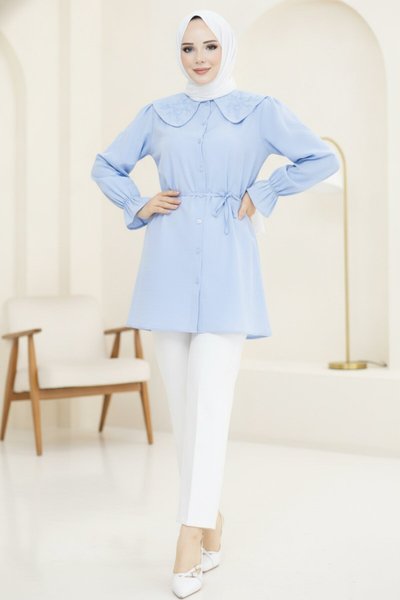
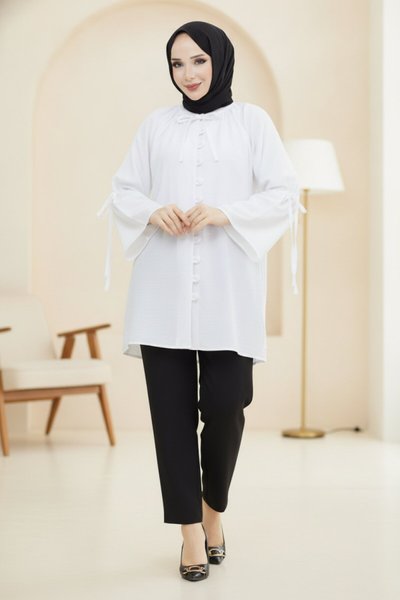
The ruffle detail in these tunics appears most often at the hem, sleeve cuffs, or neckline — adding visual weight to those areas without altering the overall modest coverage. The dominant fit is regular, which means the body of the tunic sits close enough to define the silhouette without being tight. A relaxed option is also present for those who prefer more room through the torso. Length typically extends well past the hip, which is consistent with modest tunic standards. When comparing options, check where the ruffle sits: a front placket ruffle reads differently in structure than an overall tiered hem ruffle. Browse the broader tunics range if you want to compare ruffled styles against plain or panelled alternatives.
Color and Styling Combinations
The available colorway centers on blue and white. A navy or cobalt blue tunic pairs cleanly with a white, cream, or light grey hijab — keeping contrast without introducing a competing color. A white ruffled tunic reads more delicate; pairing it with a dusty rose, camel, or soft taupe headscarf adds warmth without overpowering the simplicity of the base color. For bottoms, straight-leg trousers or a full-length skirt in a neutral tone — black, charcoal, or sand — allow the ruffle detail on the tunic to remain the focal point rather than competing with a patterned lower half.
Size Range and Fit Notes
Sizes run from 38 to 46, and plus-size options are included within that range. For those choosing at the upper end of the size range, a regular-fit ruffled tunic with vertical ruffle placement — such as a center-front cascade — creates a more elongated line than a horizontal hem ruffle, which can visually widen. A relaxed fit through the body paired with a defined ruffle at the cuff or collar keeps proportion balanced without adding bulk at the hip.
What color hijab works well with a blue ruffled tunic?
A white, ivory, or light grey hijab creates a clean contrast against a navy or mid-blue ruffled tunic without competing with the ruffle detailing. If you prefer a softer look, a dusty blue or stone-grey hijab in a similar tone to the tunic keeps the overall palette cohesive. Avoid prints near a ruffled tunic, as two layers of visual texture tend to work against each other.What season are ruffled tunics suitable for?
That depends primarily on the fabric weight of the specific tunic rather than the ruffle detail itself. Ruffles are a structural choice, not a seasonal one — they appear in both lightweight summer fabrics and heavier autumn weaves. Check the product page material information before purchasing: a ruffled tunic in a cotton or viscose blend will suit spring and summer, while one in a structured crepe or thicker woven fabric will work better in cooler months.How should a ruffled tunic be washed?
Ruffle detailing is vulnerable to distortion if exposed to high heat or aggressive spin cycles, regardless of fabric type. A gentle machine wash at 30°C or a hand wash is the safest approach for most tunic fabrics. To preserve the shape of the ruffle, lay the tunic flat to dry rather than hanging it, which can pull and stretch the ruffled sections unevenly. Always check the care label on the specific product before washing.