
Yellow Sweaters
Yellow sweaters selected for modest wear — covering knit weights, fabric types, and cuts that work with full coverage. Whether you're looking for a lighter option to layer over a long-sleeve base or a heavier knit for cooler weather, yellow tones range from pale cream-adjacent shades to deep mustard, each pairing differently with the rest of your wardrobe.
- Size
- Color
- Advantages
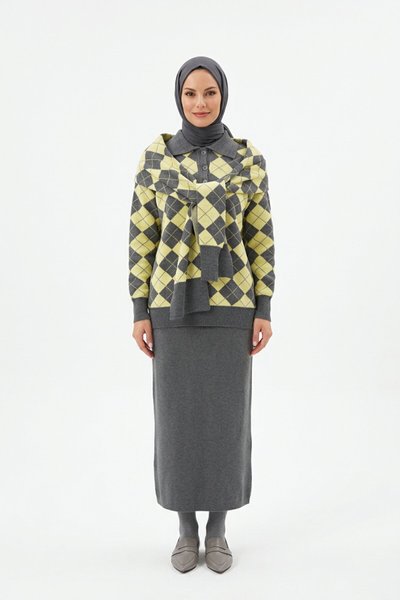
Fabric and Weight Considerations
Sweaters described as yellow span a wide range of knit structures and fiber content. Acrylic-blend knits tend to hold their shape over repeated wear and are easier to care for at home, while wool and wool-blend options offer better temperature regulation in genuinely cold conditions. Cotton knits sit between the two — breathable enough for transitional weather but less insulating in winter. When choosing by color alone, keep in mind that lighter yellows and pale mustard shades can show pilling or surface wear more visibly than darker tones, so fiber quality matters more in this palette than in darker colors. For a full overview of knit and woven options across all colors, visit the sweaters section.
Styling Yellow with Modest Layering
Yellow sits in a range that spans warm and cool undertones depending on the specific shade. Mustard and ochre yellows pair naturally with navy, camel, and olive — combinations that work well with dark or earth-toned headscarves in wool or jersey fabric. Pale or butter yellows read more neutral and layer cleanly under a cream or white headscarf without creating tonal clash. Bright canary yellows contrast sharply against most colors; pairing them with a single-tone dark headscarf — charcoal, burgundy, or black — keeps the overall look balanced rather than busy. For footwear, ankle boots in tan or cognac complement mustard tones, while white or ivory shoes work better with softer yellow shades. When wearing a yellow sweater as a mid-layer over a long-sleeve top, match the underlayer closely to the sweater's undertone rather than going purely neutral — a warm off-white underlayer under a mustard knit reads more cohesive than a cool-white one.
Occasion and Seasonal Suitability
Most sweaters in this category are suited to casual and everyday use rather than formal occasions. Heavier knits in mustard or gold-adjacent yellows can transition into smart-casual settings — paired with tailored wide-leg trousers and a structured headscarf — without looking underdressed. Lightweight cotton or fine-gauge knits in yellow work well for indoor settings in autumn and early spring. Chunky knits in this color are typically a cold-weather choice and layer well over turtleneck underlayers for full coverage in cooler temperatures.
How should yellow sweaters be washed?
The correct washing method depends on the fiber content listed on the care label. Acrylic and cotton blends are generally machine washable on a gentle or cold cycle, while wool and wool-blend sweaters typically require hand washing or a dedicated wool cycle to prevent shrinkage. Yellow and other light-toned knits are more prone to color transfer when washed with darker items, so washing separately or with similar tones is advisable. Always reshape and lay flat to dry rather than tumble drying to preserve the knit structure.What headscarf color works well with yellow sweaters?
For mustard and ochre yellows, headscarves in navy, dark brown, olive, or burgundy provide a grounded contrast without competing with the sweater. Pale or butter yellows pair cleanly with cream, ivory, or soft grey. Bright yellows are best balanced with a single deep tone — black, charcoal, or forest green — rather than mixed prints. Avoid pairing yellow sweaters with orange-toned headscarves, as the warm overlap can make the combination appear unintentionally similar in tone rather than coordinated.What season are yellow sweaters typically worn?
Yellow sweaters in lightweight cotton or fine-gauge knit fabrics are suited to autumn and spring, when layering is practical but heavy insulation is not needed. Heavier wool or wool-blend knits in mustard and golden tones are more appropriate for winter and work well as mid or outer layers in cold weather. Yellow is less commonly associated with summer knitwear, though very fine cotton knits in pale yellow can work in air-conditioned indoor environments during warmer months.