
Viscose Skirts
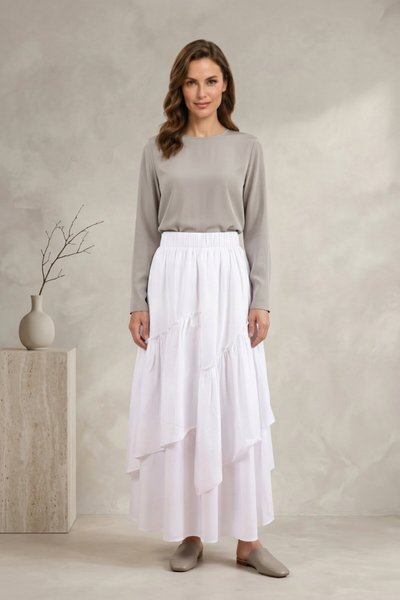
Viscose skirts made for modest wear. The fabric drapes smoothly, holds its shape through the day, and works across different occasions without feeling heavy. What you'll find here are skirts cut in viscose — from everyday lengths to more structured options — from brands that produce specifically for modest dressing.
- Style
- Size
- Color
- Advantages
What Viscose Offers in a Skirt
Viscose is a semi-synthetic fabric made from plant-based cellulose. In skirt form, it falls softly and follows movement without clinging — a useful quality in longer lengths and fuller cuts. It is lighter than cotton and more breathable than most synthetics, which makes it a practical choice for spring and autumn, and for air-conditioned indoor settings in summer. One thing to note: viscose can lose shape if stored while damp, and it benefits from low-heat washing. A-line and straight cuts in viscose tend to hold their silhouette well; pleated or gathered styles may need occasional steaming to stay crisp.
Styling Viscose Skirts
The drape of viscose suits modest layering well. A fitted cotton or modal top worn tucked or half-tucked with a midi-length viscose skirt keeps proportions balanced. For a more structured look, a belted tunic over a straight viscose skirt works in both office and smart-casual settings. In terms of color pairing, navy and stone viscose skirts work with dusty rose, olive, or cream on top — combinations that read as deliberate rather than incidental. A coordinating or tonal headscarf tends to work better here than a sharp contrast, unless the skirt is in a neutral like black, ivory, or camel. You can browse the full range of options across lengths and cuts in the skirts category.
Occasion Suitability
Viscose skirts sit naturally in everyday and smart-casual contexts. Plain, unembellished cuts in mid-length are well suited to work environments. More fluid, wider-hemmed styles work for social occasions and outdoor settings in mild weather. For formal events, viscose is generally considered a secondary option — it reads as refined but not ceremonial, which may or may not suit the occasion depending on how the skirt is cut and styled.
How should viscose skirts be washed?
Viscose is best washed on a gentle or delicate cycle at 30°C or below. Machine washing on a standard cycle can cause shrinkage or distortion, particularly in longer skirts. Lay flat or hang immediately after washing to preserve the shape, and avoid tumble drying. Ironing on a low heat setting while slightly damp helps restore the drape.What headscarf colors work well with viscose skirts?
For neutral-toned viscose skirts — camel, stone, ivory, or black — a headscarf in dusty rose, olive, or slate blue creates a grounded combination without competing with the skirt. For skirts in deeper tones like navy or burgundy, a tonal or slightly lighter shade of the same color family keeps the overall look cohesive. Bright or high-contrast headscarves work better with solid, unembellished viscose than with patterned or textured versions.What season are viscose skirts most suitable for?
Viscose is best suited to spring and autumn, when temperatures are moderate. It breathes reasonably well in mild heat but can feel uncomfortable in high humidity. In winter, viscose skirts layer well under longer cardigans or over thermal base layers. For peak summer heat, linen or cotton may be more comfortable, though viscose in lighter weights remains a practical option in indoor or shaded settings.