
Burgundy Trench Coats
Burgundy trench coats selected for modest wear — structured in cut, sufficient in length, and practical across cooler months. The deep burgundy tone sits between warm and cool, making it straightforward to layer with existing wardrobe pieces. What you'll find here are trench coat styles filtered specifically to this colorway, sourced from brands that produce for modest coverage.
- Size
- Color
- Advantages
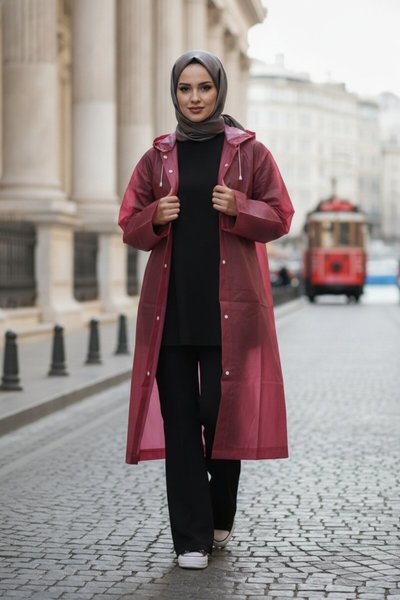
What to Expect from a Burgundy Trench Coat in Modest Sizing
A trench coat intended for modest wear typically falls at or below the knee, with a structured silhouette that allows for layering underneath. Burgundy as a color reads as a neutral-dark — it doesn't require careful matching the way brighter tones do, but it does pair most naturally with other cool-neutral colors: charcoal, navy, black, and cream. Belted and double-breasted cuts are common in the trench coat category and tend to work well over long tunics, wide-leg trousers, or full-length skirts. For more options across the full trench coat range, visit the trench coats category.
Layering and Occasion Suitability
Trench coats in this color range suit transitional weather — late autumn and early spring being the most natural fit. They function well over knit layers or structured shirt-style pieces beneath. Burgundy works particularly well with a cream or oatmeal-toned headscarf for a balanced contrast, or with a dark navy or black scarf for a tonal, low-contrast look. A charcoal or black scarf keeps the overall palette subdued; an ivory or camel tone brings the burgundy forward. Footwear in cognac, black, or dark brown coordinates cleanly with the coat's undertones.
Care and Longevity
Trench coats typically use woven outer fabrics — cotton-polyester blends, gabardine, or similar structured weaves — that hold their shape over time. Checking the care label before washing is advisable; many structured outerwear pieces recommend cold machine wash or dry clean only to preserve the lining and outer shell. Burgundy dye in woven fabrics generally holds well, but washing dark pieces inside out and at lower temperatures helps maintain color depth across wears.
How should burgundy trench coats be washed?
Most structured trench coats use woven outer shells — cotton blends, gabardine, or polyester composites — that require either a cold machine cycle or dry cleaning to preserve their shape and lining. Always check the care label on the specific garment before washing. Washing inside out and avoiding high heat helps maintain the depth of the burgundy colorway over time.Which headscarf colors pair well with a burgundy trench coat?
Cream, oatmeal, and ivory scarves create a clear contrast against burgundy without competing with it. Navy and charcoal scarves result in a darker, more tonal pairing that keeps the overall look understated. Camel and warm beige tones also work cleanly, picking up the warmer undertones within burgundy. Black is a reliable neutral choice that works in most settings.What season is a burgundy trench coat most suited for?
Trench coats are primarily a transitional-season garment — most suitable for autumn and spring when temperatures are cool but not cold enough for heavy outerwear. Depending on the lining weight, some styles can extend into mild winter days when layered over a thicker inner piece. They are generally not suited for summer, as the structured fabric and full coverage retain warmth.