
Ecru Ponchos
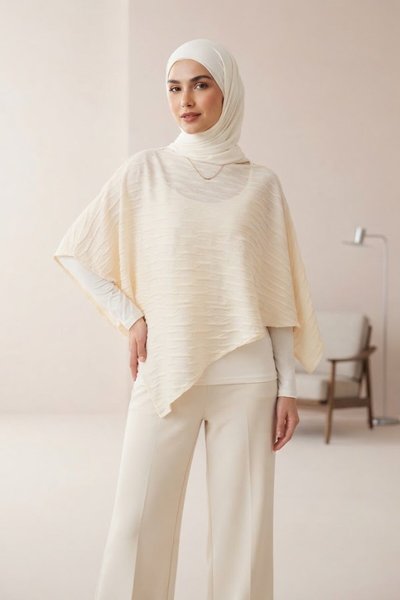
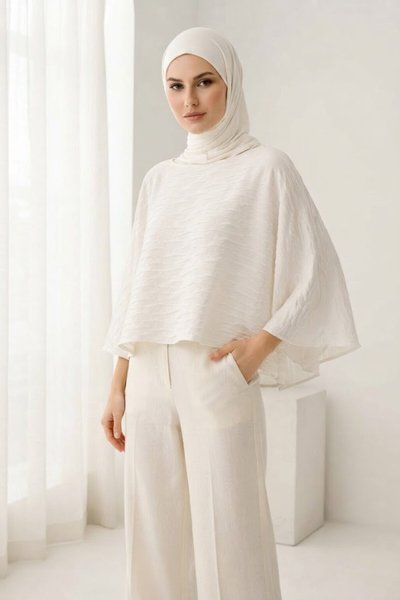
Ecru ponchos listed here are one-size layering pieces in a warm off-white tone, sourced from brands that produce specifically for modest wear. If you are looking for a poncho in ecru to layer over existing outfits or wear as a standalone top layer, the options here fit that need directly. Each product page includes size, fabric, and care information.
- Size
- Color
- Advantages
Ecru as a Base Color in Modest Layering
Ecru sits between white and beige — warmer than pure white and less heavy than cream. As a poncho color, it reads as neutral without blending into the background. For modest layering, this makes ecru a reliable choice alongside deeper tones: navy, burgundy, forest green, and charcoal all sit comfortably against it. A dark charcoal or navy abaya beneath an ecru poncho creates a clear contrast without competing. For headscarves, dusty rose, camel, or warm brown tones complement ecru without creating a flat monochrome look. Avoid pairing ecru with light grey or pale ivory at the same layer, as the tonal difference is too close to read as intentional.
When and How to Wear a Poncho
Ponchos work as a transitional layer — suited to cooler indoor environments, early autumn mornings, or layering over a long-sleeved base in mild weather. Because a poncho drapes rather than fits, it adds coverage across the shoulder and upper body without restricting movement. They are generally not suited to formal occasions but work well for daily wear, outdoor settings, and casual social gatherings. Worn over a fitted or semi-fitted base such as a long tunic or wide-leg trousers, a poncho maintains proportion without adding visual bulk. For footwear, flat ankle boots or simple loafers sit well with the relaxed silhouette a poncho creates. You can explore additional styles in the broader ponchos category.
Fabric and Care Considerations
Without confirmed fabric composition listed here, check the individual product page for material details before purchasing. In general, ponchos in knit or woven blends may require hand washing or a delicate machine cycle, while those in acrylic or polyester blends are typically more wash-resistant. Ecru tones are more prone to visible yellowing or pilling over time than darker colors, so following the care label closely extends the garment's appearance. If the fabric is light in weight, the poncho is more likely to suit indoor transitional wear; heavier weights offer more warmth for cooler outdoor use.
What color headscarf works well with an ecru poncho?
Warm, mid-depth tones sit best alongside ecru. Dusty rose, camel, warm brown, and terracotta complement the off-white base without competing with it. Avoid very light tones such as pale ivory or light beige alongside ecru, as the contrast is too subtle to read clearly.What season are ecru ponchos typically worn in?
Ponchos in general are most suited to transitional seasons — early autumn and late spring — when a full coat is too heavy but a single layer is not enough. In ecru, the color itself is season-neutral. The fabric weight determines the actual warmth level, so check the material listed on the product page to gauge whether the piece suits mild or cooler conditions.How should an ecru poncho be washed?
Care instructions depend on the specific fabric used, which is listed on each product page. As a general rule, ecru and off-white garments benefit from washing with similar light tones to avoid color transfer. If the fabric is a knit or contains wool, a gentle or hand-wash cycle at low temperature is advisable. Always check the care label before the first wash.