
Olive Half Coverage Swimsuits
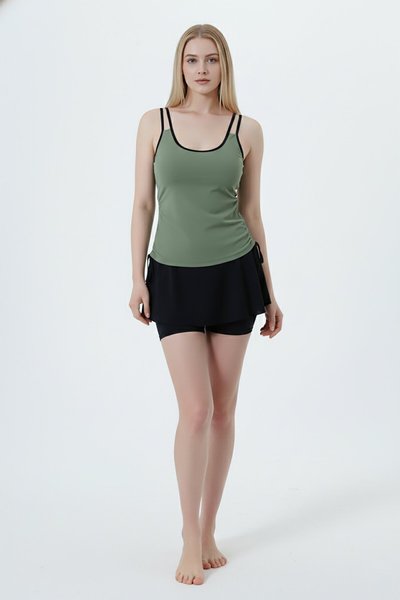
These are half coverage swimsuits filtered to olive colorways — a muted, earthy green tone that sits between dark green and khaki. The available pieces are made in polyester and come in a size range from S to 2XL, including plus sizes. If you're looking for a half coverage modest swimsuit in olive or closely related green shades, you're in the right place.
- Size
- Color
- Advantages
Fabric and Construction
The swimsuits here are made predominantly from polyester, which is a practical choice for swimwear. Polyester resists water absorption, dries relatively quickly, and holds its shape through repeated use in chlorinated or saltwater environments. It also retains color well, which matters for deeper tones like olive and green. Keep in mind that polyester offers less stretch than fabrics blended with elastane, so checking individual size guides before purchasing is advisable.
Olive in Modest Swimwear — Combination Notes
Olive sits in the warm-green spectrum and pairs well with neutral cover-ups and hijab tones. A sand-colored or ivory beach cover-up creates a balanced, low-contrast look. For a sharper contrast, a navy or charcoal outer layer reads cleanly against olive. Cream or off-white headscarf tones complement the warmth of olive without competing with it. Avoid pairing olive with strong yellow-greens, which can create an unbalanced color clash. The green adjacent tones present in this selection also coordinate naturally with brown, taupe, and rust accessories.
Sizing: S to 2XL
These swimsuits are available from S through 2XL, covering a broad range that includes plus sizes. For larger sizes, look for designs with structured bust support and a relaxed fit through the torso — these provide more comfort and ease of movement in the water. Tunic-length tops within the half coverage category also offer additional coverage through the hip area, which many find practical. Always cross-reference the brand's specific size chart, as fit can vary between swimwear cuts. Browse the full range of half coverage swimsuits to compare available cuts and constructions across the category.
How should olive polyester half coverage swimsuits be cared for?
Polyester swimwear should be rinsed in cold fresh water immediately after use, especially after contact with chlorine or saltwater, as both can degrade the fabric over time. Hand washing in cold water with a mild detergent is recommended rather than machine washing. Avoid wringing the fabric — press out excess water gently and lay flat to dry away from direct sunlight, which can fade olive tones.What hijab or cover-up colors work well with an olive half coverage swimsuit?
Ivory, cream, and sand tones pair naturally with olive and keep the overall look cohesive at the beach or pool. Navy and charcoal create a stronger contrast if you prefer a more defined color pairing. Brown and taupe accessories — sandals, bags, or wraps — also coordinate well with the warm undertones present in olive. Avoid bright white, which can make olive appear more faded by comparison.What season is an olive half coverage swimsuit suitable for?
Half coverage swimsuits in polyester are designed as warm-weather swimwear, most commonly worn during summer months or in warm-climate destinations year-round. Polyester itself is not a breathable fabric in the way cotton or linen would be, but in a water-activity context this matters less since the garment is worn in or near water. For purely land-based warm weather use, lighter layering pieces in breathable fabrics worn over the swimsuit will improve overall comfort.