
Purple Burkinis
These burkinis are available exclusively in purple, made from parachute fabric and polyester — both materials chosen for water performance. Sizes run from S through 2XL. All models offer full modest coverage. If you're looking for a purple burkini with a specific size or fit in mind, you're in the right place.
- Size
- Color
- Advantages
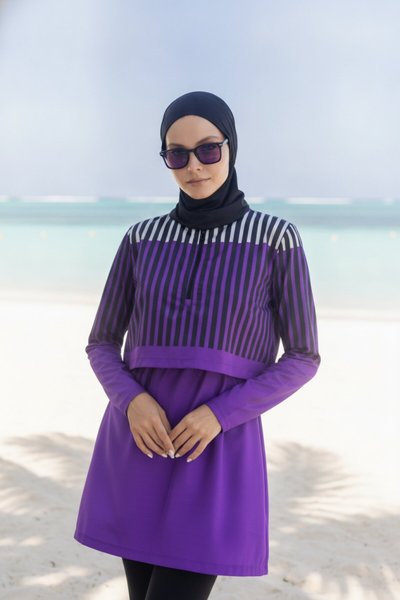
Fabric: Parachute Fabric and Polyester
All burkinis here are constructed from parachute fabric, polyester, or a combination of both. Parachute fabric is lightweight and dries quickly, which makes it practical for repeated pool or sea use. It holds its shape when wet and does not cling heavily to the body. Polyester adds durability and helps the garment retain its color after repeated washing and sun exposure. Neither fabric traps water in a way that adds significant weight during use. For care, machine washing on a gentle cold cycle is recommended, and line drying rather than machine drying helps preserve the fabric's structure over time.
Size Range and Fit
Sizes available span from S to 2XL. For those looking at the larger end of the size range, it is worth checking the specific cut of each model — some burkinis use a looser tunic-style top, which allows more ease of movement and sits more comfortably across the shoulders and torso. A-line and relaxed-fit tops in this category tend to layer cleanly over swim leggings without pulling. The full burkinis range includes additional cuts and color options if purple isn't the right fit for your needs.
Combining Purple with Hijab and Accessories
Purple sits between warm and cool tones depending on its exact shade. A deep plum or aubergine burkini pairs well with a dark navy or charcoal hijab cap underneath, keeping the overall look contained. For a lighter lilac or violet shade, a neutral stone or off-white swim hijab creates a clean contrast without competition. Navy swim footwear works with most purple tones. Avoid combining bright purple with red or orange accessories — these clash rather than contrast. If the burkini comes with a matching hood or cap, using that as the primary head covering keeps the coordination straightforward.
How should purple burkinis be washed?
Parachute fabric and polyester burkinis should be rinsed in cold water immediately after use, especially after swimming in chlorinated pools or salt water, as both can degrade color over time. Machine washing on a gentle cold cycle with a mild detergent is suitable for most models. Line drying in the shade helps preserve the purple color and prevents the fabric from shrinking or losing its shape.What hijab or swim cap color works well with purple burkinis?
For deeper purple shades such as plum or aubergine, a dark navy or charcoal swim hijab keeps the combination balanced. Lighter purple shades pair more cleanly with neutral tones like stone, ivory, or light grey. Matching the swim cap to the burkini's own hood, where included, is the most straightforward option and avoids the need to coordinate separately.What seasons are purple burkinis suitable for?
Burkinis made from parachute fabric and polyester are suited to spring through early autumn use, covering both pool and open-water swimming conditions. These fabrics do not provide thermal insulation, so they are not designed for cold-water use. For warmer months, the lightweight construction of parachute fabric in particular keeps the garment from feeling heavy in the water.