
Checkered Plaid Abayas
Checkered plaid abayas offer a structured, pattern-forward alternative to solid-color styles. The models here are cut in a regular fit and made from polyester, a fabric that holds its shape across extended wear. Sizes run from 42 to 52, covering a range that includes larger sizes. If you're looking for an abaya with a defined geometric pattern rather than a plain or embellished finish, you're in the right place.
- Size
- Color
- Advantages
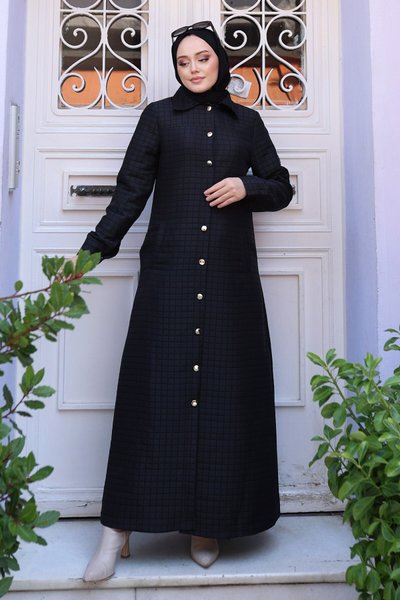
Fabric and Construction
The abayas here are made from polyester, which is the dominant material in this selection. Polyester holds the plaid pattern clearly because it resists stretching and retains color definition through repeated washing. It also drapes with some structure, which suits the regular fit these abayas are cut in. The trade-off is breathability — polyester does not ventilate as well as cotton or viscose, so these abayas are better suited to temperate conditions or air-conditioned environments rather than outdoor summer heat. For care, machine washing on a gentle cycle at low temperature is generally safe for polyester, though checking the individual product label remains the reliable approach.
Styling Plaid Abayas
A black plaid abaya — the color represented in this selection — works well with headscarves in neutral or muted tones. Camel, stone, ivory, and dark navy all sit cleanly against a black plaid base without competing with the pattern. If you prefer contrast, a deep burgundy or forest green headscarf creates a grounded combination. Footwear in black or dark brown keeps the look coherent. Avoid headscarves with their own bold print, as two competing patterns in the same outfit tend to reduce the clarity of each. For a cleaner finish, plain or subtly textured fabrics in the headscarf work best alongside a patterned abaya. You can browse the full range of abayas to compare plaid options alongside solid and other patterned styles.
Sizing and Fit
Sizes in this selection run from 42 to 52, and larger sizes are available within that range. The regular fit in these abayas falls with a consistent silhouette from shoulder to hem without tapering sharply at the waist. For sizes from 48 upward, a regular or slightly relaxed cut like this tends to distribute fabric evenly across the body without pulling at the shoulders or hem. If you typically find A-line or belted cuts more comfortable, it is worth checking the individual product measurements before ordering, as regular-fit abayas can vary in ease allowance between brands.
How should plaid abayas be washed?
Polyester plaid abayas can generally be machine washed on a gentle or delicate cycle using cold or lukewarm water, up to around 30°C. Avoid tumble drying on high heat, as this can cause the fabric to pill or lose its shape. Air drying flat or on a hanger is the more reliable option for maintaining the abaya's structure and keeping the plaid pattern sharp. Always check the care label on the individual product, as finishing treatments can affect washing instructions.What headscarf colors work well with a plaid abaya?
For a black plaid abaya, neutral headscarves in camel, ivory, stone, or dark navy complement the pattern without competing with it. Deep burgundy or forest green are also strong options if you want a more defined contrast. Plain or lightly textured headscarves work better alongside a plaid print than headscarves with their own bold pattern, which can create visual clutter.What season are plaid abayas suitable for?
Polyester plaid abayas are best suited to autumn, winter, and spring, or to air-conditioned indoor settings in warmer months. Polyester does not breathe as freely as natural fibers like cotton or linen, so it can feel warm in direct summer heat. For outdoor wear in summer, a lighter-weight or natural-fiber abaya would be a more practical choice.